Our Mission
Storytelling for Nature Preservation
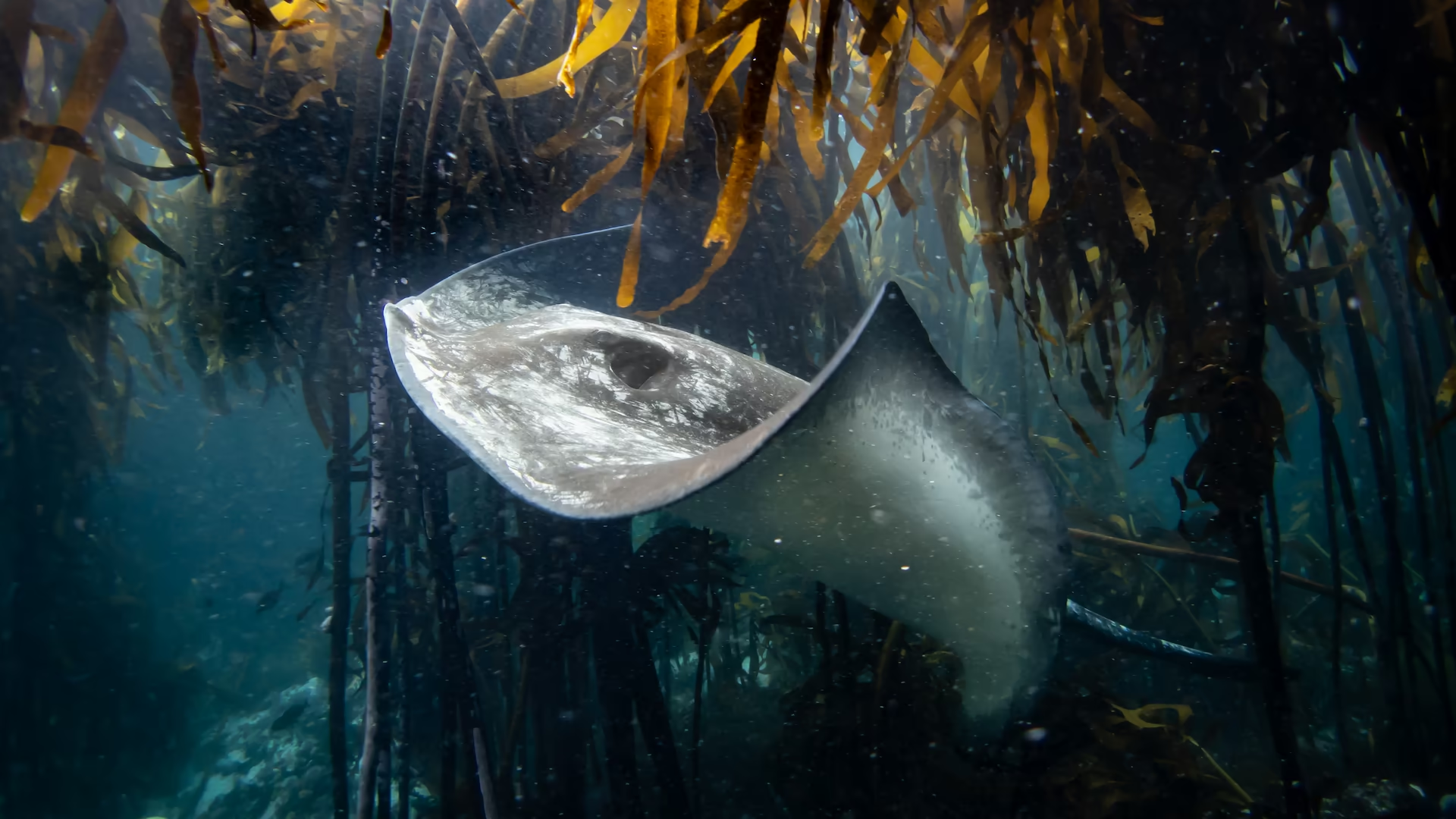
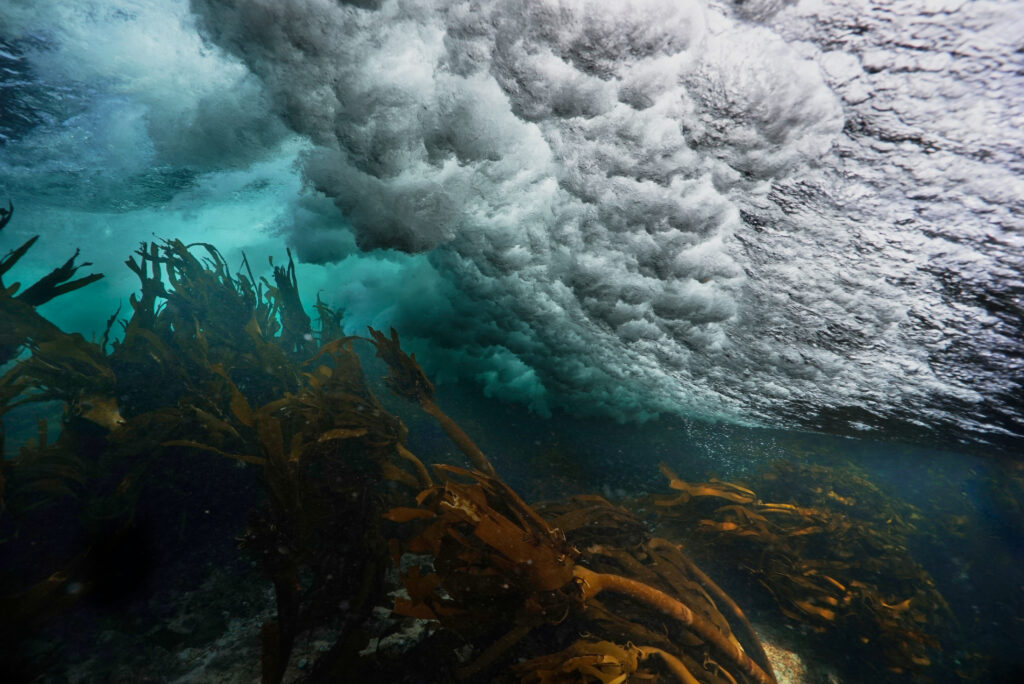
We are a community of scientists, storytellers, journalists and filmmakers who are dedicated to the wild, and specifically the Great African Seaforest.
We advocate for the healing of our planet by connecting people to nature through our science-based immersive storytelling.
“I need no convincing that an ecosystem such as this is of inestimable value & must be protected.”
SIR DAVID ATTENBOROUGH
Our Projects
Inspired by Nature
Supported by Science
Guided by Indigenous Wisdom
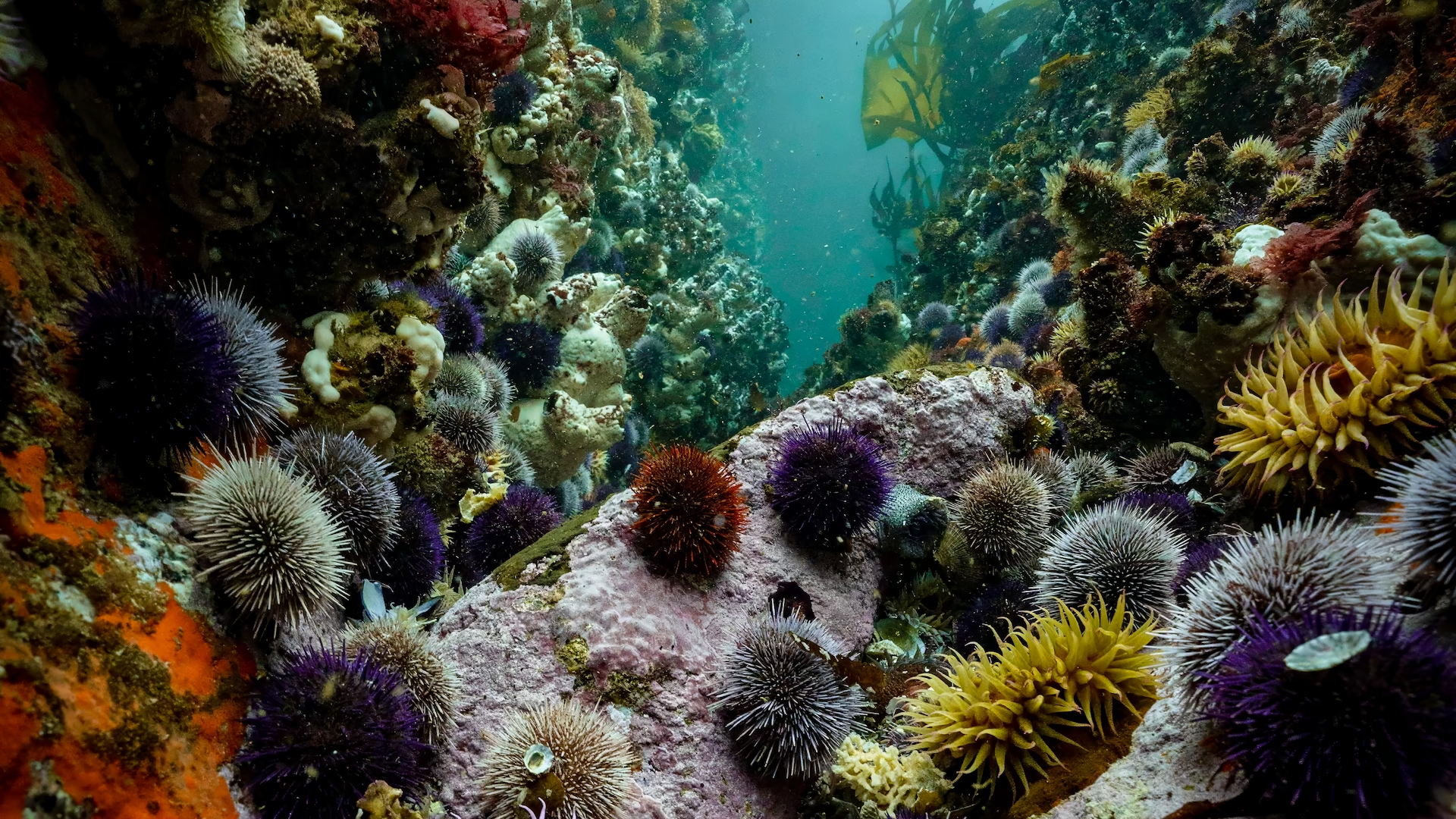
All our work is based on our connection to the Great African Seaforest. This underwater forest is a deep source of inspiration for our minds, souls and hearts. By sharing these experiences with the world, we hope to inspire a global movement of nature connection and more stories about the intrinsic relationship between humans and the living planet.
Films
World-class films are an integral part of our content. We tell immersive, personal stories about people and nature, to a global audience. Our films include the Netflix Original My Octopus Teacher; Older than Trees – a film about the future of sharks and rays, and our newest feature documentary Pangolin: Kulu’s Journey about a special baby pangolin.
Books
Our Sea Change book has been republished as Underwater Wild, and we released a children’s book, A Journey Under the Sea. Craig Foster’s new book Amphibious Soul about “Finding the wild in a tame world,” based on his own ‘rewilding,’ is available to purchase.
Exhibitions
Sea Change Project collaborates on multimedia exhibitions that convey the story of our interconnectedness with the natural world. Showcasing the latest research on the origins of Homo sapiens while raising awareness for the Great African Seaforest and kelp forests worldwide. Visit the Origins exhibit at Cape Point, De Hoop Nature Reserve and most recently at Stillbaai.
Education
Having a connection to nature is everyone’s birthright. It is often said we must leave a better planet to our future children but we need to also leave better children to become custodians of this living world and for that we need nature education. We are committed to sharing our love and knowledge of the Great African Seaforest, and nature as a whole, with as many people as we can reach to inspire a sea-change.
Science
Science guides all our work at Sea Change. We conduct biodiversity research and collaborate with academic institutions to uncover the secrets of the Great African Seaforest. Through our 1001 Seaforest Species project, you’ll encounter the extraordinary creatures of this underwater ecosystem and discover their remarkable stories. This project blends science, underwater tracking, and storytelling to illuminate the hidden world of the Seaforest.
Podcasts
Our podcast series Back to the Water, hosted by Zolani Mahola and Pippa Ehrlich, asks what it means to be disconnected from nature and one’s culture – and what happens when you reconnect. The first episode of Back to the Water, “More Than One Octopus” premiered at Tribeca Festival, winning in its category, and available on all podcast platforms.
PATRON & AMBASSADOR
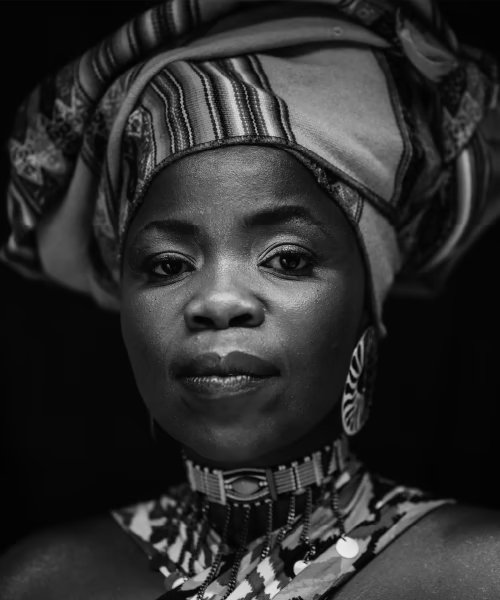
Zolani Mahola
Vocalist, Actress & Nature Activist
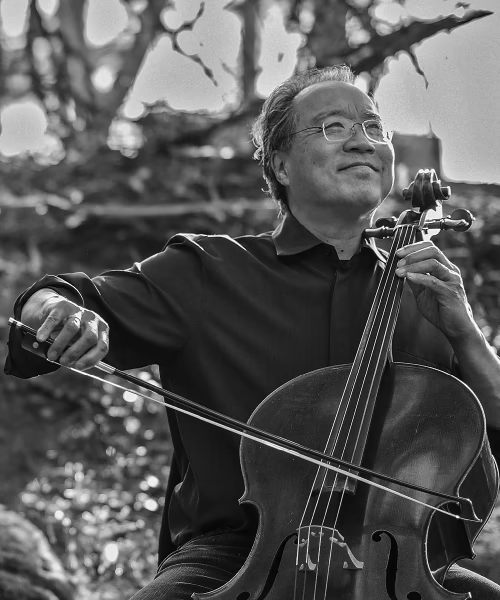
Yo-Yo Ma
Cellist
YOU CAN MAKE A DIFFERENCE
Preserve the Great African Seaforest
Kelp forests are highly productive near-shore marine ecosystems. They are biodiversity hotspots, sequester carbon, release oxygen and slow coastal erosion. They are found on 30% of our world’s coastlines and are one of the most vulnerable marine ecosystems to the climate emergency.
Our first goal was to make the Great African Seaforest a global icon and bring attention to the world’s kelp forests. With your help and support following the success of My Octopus Teacher, we achieved this.
In this time of environmental upheaval and biodiversity loss, we need to keep ensuring the long-term preservation of the Great African Seaforest. You can help by continuing to support our work in reminding people of their intrinsic connection with nature.
WHAT YOU CAN DO
Take Action
Lack of knowledge and awareness, and our human impact on this planet, are at the root of all threats to the Great African Seaforest and our global kelp forests. We are in the ocean every day, learning the secrets of the seaforest and finding stories that inspire people to reconnect with nature.
We hope our stories, knowledge and love of this environment can remind us that we are part of the natural world and motivate action that allows the living planet to thrive and regenerate itself.
To help us ensure the long-term preservation of the Great African Seaforest and to raise awareness for kelp forests globally, please watch, donate and share.
Social
#0048 Knobby argonaut – Argonauta nodosus
Beautiful and almost mythical, these pelagic octopus are structural engineers and reproductive marvels – with a bit of the bizarre thrown in.
Female Knobby argonauts are much larger than males – their total length is up to 50cm while the males are only about 2cm – and use webs on their first arm pair to secrete a thin calcium carbonate shell in which to brood their eggs (see slide 4 for an image of the eggs).
These delicate structures have fascinated biologists for centuries. In the 1800s, it was believed that the octopus inside the shells were parasites that had killed the rightful shell owners. This theory was strengthened when the shells were also found to contain multiple detached arms.
The debunking of this delivered a mind-blowing discovery about the argonaut’s reproductive process. The dwarf males, who live freely in the ocean without a shell, transfer spermatophores to a specialised arm, which then detaches from his body, crawls autonomously into the female’s mantle cavity and finds her reproductive tract, where it deposits a sperm packet. The detached arm might remain inside the female for weeks, with spermatophores stored until she is ready to spawn.
Some females can have multiple detached arms inside their shells! In this act of sacrifice, the tiny males give both life and limb – believed to die after delivering their genetic legacy.
@saveourseasfoundation #1001speciesproject #1001seaforestspecies #greatafricanseaforest #seachangeproject
Here’s some feel-good news to start your weekend! 🐙
Images: @unsplash @the_rewilding
#seachangeproject #goodnews #planetearth #preservation #biodiversity
Any idea how many species of kelp are in the Great African Seaforest? Know what a holdfast is? Our latest blog is a 101 on all things kelp (think of your next family Scrabble game…). Link in bio 🐙
#greatafricanseaforest #kelp #1001speciesproject #seachangeproject #biodiversity
#0047 Sucker-foot sea hare – Aplysia juliana
A rabbit in the ocean that whips up clumps of spaghetti? Well, not really. These large sea hares – some as big as rugby balls – are a type of sea slug and are so named because their rhinophores resemble bunny ears. These sensory organs allow the sea hare to taste, smell and detect chemicals in the water to find food and locate mates. And the ‘spaghetti’? These are the animal’s eggs, which they lay in cream-coloured tangles on various seaweeds.
This particular species is variably coloured, its whitish, yellow or dark-brown body spotted or striped in brown or black. The yellow and brown ones are almost delicious looking, as though made from custard and chocolate.
However, predators of these algae-munching animals are in for a surprise: Sucker-foot sea hares secrete a purple dye when disturbed – a behaviour known as ‘phagomimicry’. The dye consists of a melange of chemicals that mimic the smell of food, which overwhelm the predatory senses and make the sea hare undetectable. A true case of pulling a rabbit out of a hat!
#1001seaforestspecies #1001speciesproject #1001species @saveourseasfoundation #greatafricanseaforest
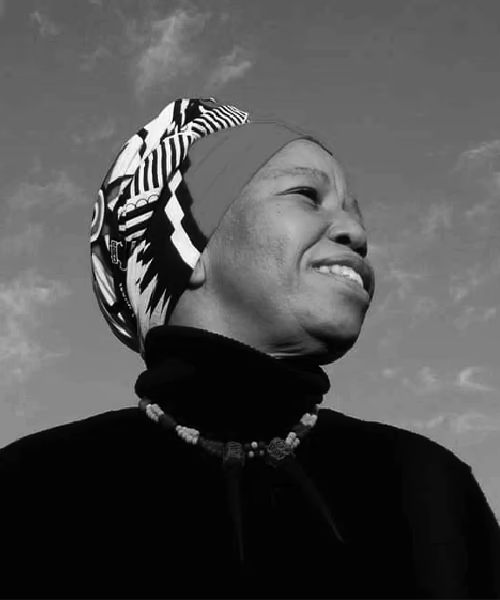
Gogo Masechaba (Lindy Dlamini)
Gogo Masechaba is a sangoma – a traditional healer called by the ancestors to bridge the seen and unseen. Through the use of bones and plant medicine, she helps untangle lineage knots and guide people back into alignment.
As a sangoma, her lens is spiritual, ancestral and intuitive. Where a biologist classifies the kelp forest, she communes with it as a realm of the ancestors and a sacred pharmacy.
Her collaboration with Sea Change weaves indigenous knowledge systems with science – exploring the unknown to reveal the ancestral connections that deepen empathy for our oceans. Her work serve as a bridge between indigenous knowledge systems and science, helping integrate ancestral wisdom into the conservation and cultivation of marine ecosystems.
Gogo Masechaba also offers nonlinear insight to ensure ocean protection is rooted in respect, reciprocity (Ubuntu) and the holistic healing of both water and people. This includes rituals and ceremonies that ask for permission from the ancestors and elemental spirits before entering the water and undertaking activities such as tracking or diving.
‘For me, learning is about recognising the “signatures” of the water spirits and understanding how the kelp forest breathes in a way that resonates with the human spirit,’ she says.
#seachangeproject #greatafricanseaforest #kelpforest #ocean
#0046 Giant jelly – Rhizostoma luteum
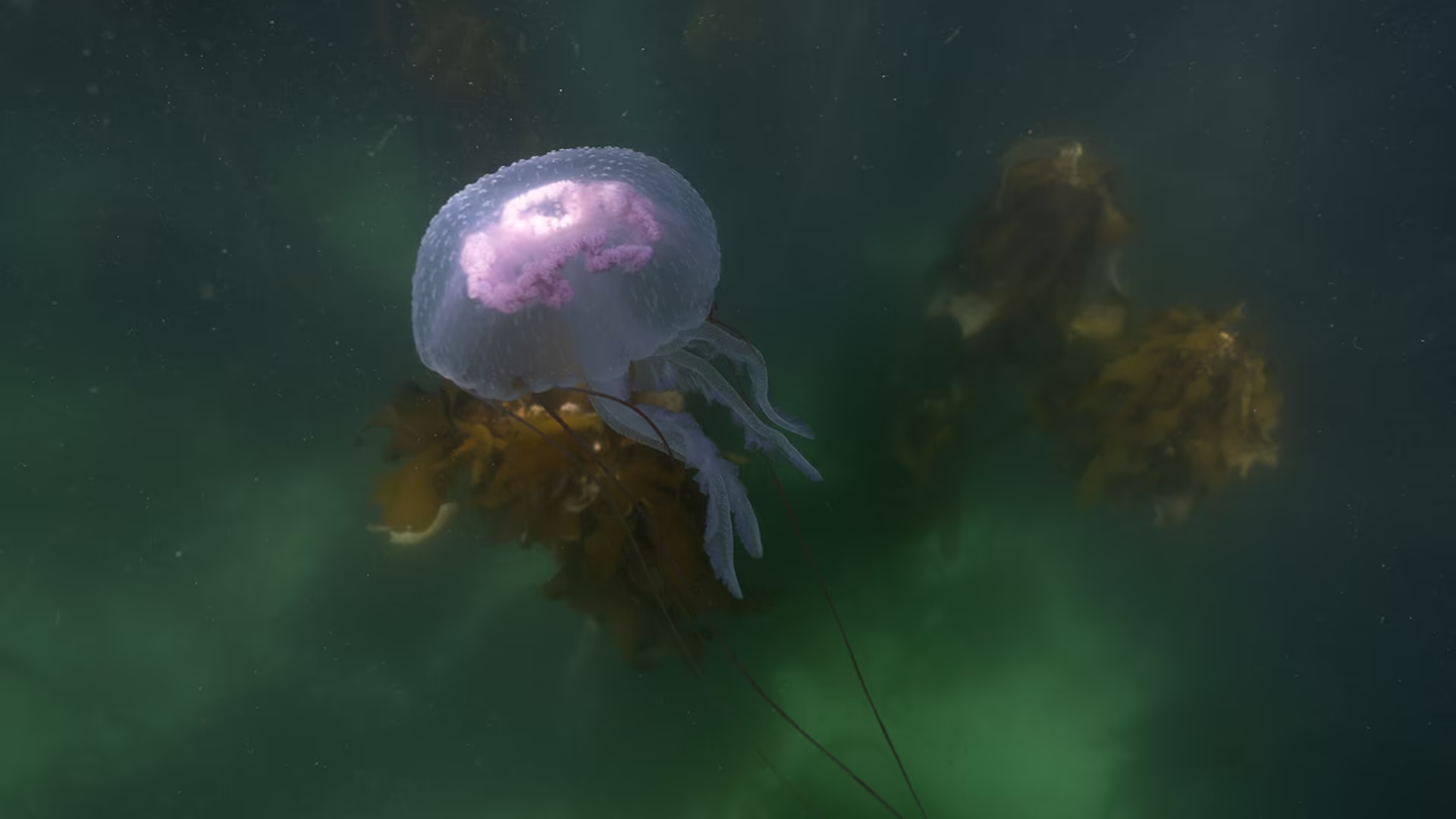
What this large jelly lacks in tentacles, it more than compensates for with mouths. Giant jellies, which are often washed ashore, lack a central primary mouth; instead, their four pairs of thick oral-arms are lined with numerous small mouthlets. The bell, firm and scalloped at the edges, can span up to 60cm, while the oral-arms may trail club-shaped appendages that stretch to twice that length. Though they drift gracefully through the water feeding on zooplankton, they too become prey when stranded on beaches, where plough shells eagerly munch on them.
@saveourseasfoundation #1001seaforestspecies #1001species #1001speciesproject #saveourseasfoundation
In our hurtling human world, nature invites us to return to love. 💙
#seachangeproject #natureconnection #greatafricanseaforest #biophilia #ocean
Often out of sight, kelp forests are found across the world — each one unique ecosystems that not only support thousands of marine species but all life on Earth. 🌍
#greatafricanseaforest #kelpforests #kelp #biodiversity #seachangeproject
Chacma baboon – Papio ursinus
A baboon in the ocean? Snacking on mussels and limpets? On the shores of the Great African Seaforest, this unlikely scene is real. While marine foods make up only 10% of their diet, some troops on the Cape Peninsula have acquired a taste for seafood, descending to the rocky shore at low tide to get their protein fix. They prise open mussels with their dexterous hands and, once their bellies are full, retreat to nearby cliffs to rest. Managing baboon and human interactions is an ongoing debate, as built-up areas offer quick, high-calorific food. However, the preferred diet of these omnivorous animals includes fruits, leaves and invertebrates, and they have been observed hunting reptiles, birds and small mammals.
@saveourseasfoundation #1001seaforestspecies #1001speciesproject #greatafricanseaforest #marinebiology
Pippa is known for her Oscar-winning co-direction on My Octopus Teacher — telling stories has always been her passion and calling. She has since co-directed My Mercury and directed Pangolin: Kulu’s Journey, and is currently working on a new feature film and a podcast, called Back To The Water, the first episode of which won Best Independent Nonfiction Podcast at the 2024 Tribeca Festival. This is just one of many awards Pippa has received.
Pippa – who in 2025 was recognised as a Wayfinder by the National Geographic Society – is also kept busy with conferences, festivals and speaking events around the world. This week, she delivered a talk at the Xposure International Photography Festival in the United Arab Emirates, where she spoke about kelp forests and the need to protect them and introduced the 1001 Seaforest Species, an exciting science and storytelling project in partnership with Save Our Seas Foundation. She will also be presenting at the National Geographic Storytellers Summit in Los Angeles next week.
When she’s not travelling or crafting stories, she spends as much time as possible immersed in the Great African Seaforest — a place that is a constant source of connection and inspiration.
🎬 Click on our bio to watch Pippa’s Xposure presentation.
@the_rewilding #seachangeproject #pippaehrlich #myoctopusteacher #storyteller
All kelp is seaweed, but not all seaweed is kelp …. explore why kelp forests deserve our attention in our latest blog. Click the link in our bio.
#greatafricanseaforest #kelpforests #kelp #seaweed #seachangeproject
#0044 Elegant feather star – Tropiometra carinata
As the name suggests, this striking species has 10 straight, upward directed arms that bear up to 100 evenly spaced lateral branches (pinnules) that resemble the flight-feather of a bird. And seeing these animals in ‘flight’ is truly special. While they are usually attached to shallow reefs, sometimes among other smaller feather stars, they are capable of swimming when disturbed, their arms moving up and down in a slow, graceful movement, almost puppet-like. Elegant feather stars also use these arms to snag floating plankton or other organic matter, feeding the food via tube feet that line the pinnules into a groove running along the length of the arm. There, cilia (tiny, hair-like structures) propel mucous and food particles to the mouth, situated on the upper surface of the central disc. The pinnules have another important function – reproduction. While we’re still researching the exact process of this species, male feather stars store gonads in these branches, which rupture when the gametes are mature, releasing sperm and eggs into the water column. Here, they develop as planktonic larvae that then settle on the reef … and so begins a new generation of these yellow-hued wonders.
@saveourseasfoundation #1001seaforestspecies #1001species #marinebiology #seachangeproject